
Parenting & Kids

Recommended Reading for Mental Fitness, Habits & Emotional Well-Being

Over the years, I’ve read a lot of books across psychology, neuroscience, habits, parenting, and personal growth. Some were interesting. Some were insightful. And some genuinely changed how I understand myself and the people I work with.

This page isn’t about reading more.
It’s about reading what actually helps, when you need it.

I’ve organized these recommendations by topic so you can find the right book for where you are right now. Within each section, titles are listed alphabetically to keep things simple. I’ll continue adding to this list as I come across resources that feel genuinely useful, practical, and grounded.


How to Use This Reading List

Skim the categories

  • Notice which section pulls at you
  • Start with one book that feels relevant to your current season

Growth doesn’t happen by consuming more information. It happens by understanding yourself a little better and applying what fits.

Where Should I Start?

If you’re not sure where to begin, use this list to jump directly to the section that best matches what’s coming up for you.


Each section includes its own “Start Here” recommendation to help you choose a first book once you arrive.

💛 Anxiety, Stress & Emotional Regulation

🎯 Confidence, Self-Trust & Boundaries

🧠 Habits, Identity & Behavior Change

🌱 Meaning, Values & Living Well

🌿 Mind–Body, Healing & Physical Well-Being

❤️ Relationships, Attachment & Family Systems

🧠 Understanding the Brain & Human Behavior


💛 Anxiety, Stress & Emotional Regulation

Anxiety isn’t a personal failure. It’s a protective response that becomes overwhelming when the nervous system is under chronic strain, uncertainty, or pressure.

This section focuses on understanding how stress, emotions, and the body interact, and offers grounded tools for regulation rather than suppression. These books support learning how to notice what’s happening internally, respond with more skill, and build emotional resilience over time.

Start with the one that feels most relevant to your current experience or use the guide below to narrow it down.

Where to Start

  • If emotions feel confusing or overwhelming: Atlas of the Heart
  • If anxiety shows up as overthinking: Stop Overthinking
  • If stress is affecting your body or health: When the Body Says No
  • If you want practical regulation tools: Whole Brain Living or Just Breathe
  • If you want a broader understanding of modern stress: The Myth of Normal

Atlas of the Heart

Gives language to emotions so people can understand what they’re actually feeling instead of judging it.
👉 https://amzn.to/3YLad7u


Cognitive Behavioural Therapy

An accessible introduction to CBT tools for understanding thought patterns and emotional responses.
👉 https://amzn.to/4b73a0i


Rising Strong

A guide to resilience, emotional processing, and learning from failure.
👉 https://amzn.to/49NxRVW


Stop Overthinking

Simple strategies to quiet mental loops and reduce anxiety.
👉 https://amzn.to/4jLFh0l


The Body Keeps the Score

Foundational for understanding trauma and how it lives in the body.
👉 https://amzn.to/3YLTZuO


The Myth of Normal

Challenges what we accept as “normal” in a stressed, disconnected culture.
👉 https://amzn.to/4bEEDQc


The Pain Management Workbook

Evidence-based tools for understanding and managing chronic pain through a biopsychosocial lens.
👉 https://amzn.to/4a03QTU


Unstressable

A logical, compassionate approach to understanding stress and reducing unnecessary suffering.
👉 https://amzn.to/460DMpj


When the Body Says No

Explores how chronic stress and suppressed emotion affect physical health.
👉 https://amzn.to/3NpJkDA


Whole Brain Living

A practical framework for recognizing and integrating emotional states.
👉 https://amzn.to/4b74Kiy


Breath

Explains why breath is foundational to nervous system regulation and emotional stability.
👉 https://amzn.to/4pWni9a


Just Breathe

An entry point into breathwork for calming the nervous system.
👉 https://amzn.to/4qwotNw


The Wim Hof Method

A practical guide to breathwork, cold exposure, and building resilience.
👉 https://amzn.to/49sahPz


🎯 Confidence, Self-Trust & Boundaries

Confidence isn’t about being louder, tougher, or more certain. It’s about having a stable inner ground the ability to trust yourself, stay connected to your values, and respond rather than react.

This section focuses on belief systems, identity, self-talk, and boundaries. The books here explore how confidence is shaped over time and how it can be rebuilt gently, practically, and sustainably. You strengthen confidence by reconnecting with who you already are and what it is that you want.

Start with the one that feels most relevant to your current experience or use the guide below to narrow it down.

Where to Start

  • If self-worth feels conditional or fragile: I Am Enough
  • If confidence feels performative or inconsistent: Strong Ground
  • If perfectionism or self-criticism is holding you back: The Gifts of Imperfection
  • If you want a simple, daily way to rebuild self-trust: The High 5 Habit
  • If boundaries feel hard or you’re carrying too much responsibility: The Let Them Theory

I Am Enough

Foundational belief work around worthiness and self-acceptance.
👉 https://amzn.to/49sy0z1


Pursue the Best You

Explores identity, belief, and values-based performance rather than outcome obsession.
👉 https://amzn.to/4a1Ekxy


Strong Ground

Reframes confidence as steadiness and inner security rather than bravado.
👉 https://amzn.to/4qwM6Wj


Success for Life

Focuses on mindset and belief change as the foundation for success.
👉 https://amzn.to/4sH1kcB


Tell Yourself a Better Lie

Explores how internal narratives shape identity and outcomes.
👉 https://amzn.to/4qsz9MX


The Gifts of Imperfection

Encourages self-acceptance, authenticity, and letting go of perfectionism.
👉 https://amzn.to/4r0XauG


The High 5 Habit

Builds self-trust through a simple, embodied daily practice.
👉 https://amzn.to/4jOkcT8


The Let Them Theory

A simple mindset shift for releasing control and strengthening boundaries.
👉 https://amzn.to/3NxpTsn


Ultimate Confidence

Focuses on rewiring unconscious beliefs that undermine confidence.
👉 https://amzn.to/4sL9Wiz


Why Woo‑Woo Works

Bridges intuition and science in a grounded, evidence-based way.
👉 https://amzn.to/49rLzyK


🧠 Habits, Identity & Behavior Change

Change isn’t about willpower or motivation. It’s about understanding how habits form, how identity shapes behavior, and how small, repeatable actions create momentum over time.

This section focuses on building sustainable patterns by working with the brain rather than against it. The books here explore attention, learning, emotional impulses, and values-based action so change feels more realistic and less exhausting.

Start with the one that feels most relevant to your current experience — or use the guide below to narrow it down.

Where to Start

  • If emotions or impulses derail your behavior: A Path Through the Jungle
  • If you want practical, identity-based habit change: Atomic Habits
  • If focus and distraction are the main challenge: Indistractable
  • If you want clarity around purpose and direction: Find Your Why
  • If you want to strengthen learning, memory, or mental performance: Limitless

A Path Through the Jungle

A practical guide to managing emotions, impulses, and behavior under pressure.
👉 https://amzn.to/4jLKCVB


Atomic Habits

Practical, identity-based habit change that works without relying on motivation or willpower.
👉 https://amzn.to/45Qharz


Find Your Why

A practical guide to clarifying purpose so decisions and actions feel more aligned.
👉 https://amzn.to/4a2ltTa


Limitless

Expands beliefs around learning, memory, and cognitive potential.
👉 https://amzn.to/3LQmncc


My Hidden Chimp

A relatable way for children to understand emotional reactions and internal conflict.
👉 https://amzn.to/4qsCY4R


The Chimp Paradox

A practical framework for managing emotional impulses under pressure.
👉 https://amzn.to/4qXBpf3


The Lean Startup

Teaches adaptive thinking, experimentation, and learning through action.
👉 https://amzn.to/4quXfH7


Think Again

Encourages flexibility, curiosity, and the ability to update beliefs.
👉 https://amzn.to/4qS9sW6


Why Has Nobody Told Me This Before?

Accessible mental health tools for everyday emotional challenges.
👉 https://amzn.to/4t4EY5h


Indistractable

Helps people reclaim attention by understanding emotional triggers behind distraction.
👉 https://amzn.to/3ZlgHtK


🌱 Meaning, Values & Living Well

This section is for moments when the question isn’t “How do I fix this?” but rather “How do I want to live?”

The books here explore purpose, values, perspective, leadership, community, and long-term fulfillment. They’re less about solving a specific problem and more about stepping back, gaining clarity, and making choices that feel aligned over time.

Start with the one that feels most relevant to where you are right now — or use the guide below to narrow it down.

Where to Start

  • If you’re questioning meaning or identity: A New Earth
  • If you want practical guidance on building a meaningful life: Build the Life You Want
  • If purpose feels unclear: Start with Why
  • If you’re interested in longevity and lifestyle alignment: The Blue Zones
  • If you want a calm, reflective mindset approach: Think Like a Monk

A New Earth

Helpful for people ready to step back from ego-driven thinking and cultivate presence and awareness.
👉 https://amzn.to/45kl9wq


Build the Life You Want

A grounded blend of happiness research and real-life strategies for building meaning over time.
👉 https://amzn.to/3YLu2eM


Leaders Eat Last

Shows how trust, safety, and leadership shape performance and wellbeing.
👉 https://amzn.to/4a02poC


Start with Why

Clarifies how purpose influences motivation and fulfillment.
👉 https://amzn.to/45Qi2MR


The Blue Zones

Shows how community, lifestyle, and purpose influence longevity.
👉 https://amzn.to/4jSgtUG


The Light We Carry

A reflective exploration of resilience, hope, and inner strength.
👉 https://amzn.to/4b1VlZC


Think Like a Monk

A practical approach to training the mind for calm, clarity, and purpose.
👉 https://amzn.to/4b2D3HL


Main Street Millionaire

A grounded look at building financial independence outside hype-driven business models.
👉 https://amzn.to/4r5PKX3


🌿 Mind–Body, Healing & Physical Well-Being

This section is for times when physical health, energy, or symptoms feel closely tied to stress, emotions, beliefs, or lifestyle. Rather than separating the body and mind, these books explore how they work together shaping resilience, healing, and long-term wellbeing.

The focus here isn’t perfection or optimization. It’s understanding your body with more curiosity, compassion, and agency, and making changes that are sustainable over time.

Start with the one that feels most relevant to what your body is asking for right now — or use the guide below to narrow it down.

Where to Start

  • If stress or emotions are affecting your physical health: When the Body Says No
  • If you want to understand metabolism and energy regulation: The Obesity Code
  • If you’re curious about longevity and healthspan: Outlive
  • If nutrition feels confusing or overwhelming: Food for Life
  • If belief, stress, and healing feel connected: The Mindful Body

Trying to Get Pregnant and Succeeding

Belief-based support for fertility and reproductive challenges.
👉 https://amzn.to/49DoQyA


Fast Like a Girl

Useful for understanding fasting through a female hormonal lens rather than a one-size-fits-all model.
👉 https://amzn.to/3NrncZC


The Complete Guide to Fasting

A physiology-based guide to fasting and metabolic health.
👉 https://amzn.to/3YHrwGt


The Menopause Reset

Offers insight into hormonal health during midlife transitions.
👉 https://amzn.to/4sNTcXK


The Obesity Code

Reframes weight and metabolism through hormones rather than calories.
👉 https://amzn.to/4jLDLeP


Brain Energy

Connects mental health and metabolic health in a way that reframes anxiety, mood, and resilience.
👉 https://amzn.to/4sTUBML


Eat to Beat Disease

Empowering nutrition science that connects food choices to immune and long-term health.
👉 https://amzn.to/4pJp25a


Food for Life

Explains how gut health, diversity of foods, and lifestyle shape long-term wellbeing.
👉 https://amzn.to/45lXcoy


Heal Your Body

Introduces the idea that emotional patterns can influence physical symptoms.
👉 https://amzn.to/3LSucht


How Your Mind Can Heal Your Body

Explores the science behind belief, stress, and the mind–body connection.
👉 https://amzn.to/45gZUvq


Is Your Body Trying to Tell You Something?

Encourages curiosity about physical symptoms instead of fear or suppression.
👉 https://amzn.to/4qZpLjO


Outlive

Encourages proactive thinking about healthspan, not just lifespan.
👉 https://amzn.to/3NrqgoA


The Body

An engaging, accessible overview of how the human body works.
👉 https://amzn.to/4bCXtHo


The Comfort Crisis

Challenges the idea that comfort equals wellbeing and explores resilience through challenge.
👉 https://amzn.to/4b7de9A


The Emotion Code

Explores emotional energy and its influence on physical and emotional wellbeing.
👉 https://amzn.to/3NQlgK4


The Mindful Body

Explores how mindset, awareness, and perception influence physical health and wellbeing.
👉 https://amzn.to/3ZgVzVA


The Power Is Within You

Encourages self-responsibility, belief change, and inner agency.
👉 https://amzn.to/3YMci2P


You Can Heal Your Life

Foundational belief work linking self-talk and wellbeing.
👉 https://amzn.to/49Evi8n


Young Forever

Explores longevity through functional medicine and lifestyle choices.
👉 https://amzn.to/3NpGYVe


❤️ Relationships, Attachment & Family Systems

Relationship patterns don’t begin in adulthood they develop over time through early attachment, family dynamics, and experiences of safety, repair, and connection.

This section explores how relationships function across the lifespan, from parenting and childhood development to adult partnerships and family-of-origin healing. The books here focus on emotional regulation, communication, boundaries, and understanding why certain relational patterns repeat and how they can change.

Start with the one that feels most relevant to your current relationships or use the guide below to narrow it down.

Where to Start

  • If parenting or supporting children feels emotionally demanding: Good Inside
  • If childhood experiences are affecting adult relationships: Adult Children of Emotionally Immature Parents
  • If conflict keeps repeating in close relationships: Fight Right
  • If connection feels strained or distant with a partner: Eight Dates
  • If you want research-backed relationship tools: The Seven Principles for Making Marriage Work

A Child Is Born

A photographic exploration of human development before and after birth.
👉 https://amzn.to/49N0wdD


Emotional Regulation for Parents

Helps parents regulate themselves first so children can feel safe and supported.
👉 https://amzn.to/4sLCisT


Good Inside

A compassionate, regulation-first parenting approach focused on connection over control.
👉 https://amzn.to/4jMBVdn


The Anxious Generation

A look at rising anxiety in youth and the impact of modern culture and technology.
👉 https://amzn.to/49GElFV


Adult Children of Emotionally Immature Parents

Validating and clarifying for anyone who grew up feeling unseen, responsible, or emotionally alone.
👉 https://amzn.to/4jK85Xf


Eight Dates

Structured, meaningful conversations that strengthen connection and long-term relationships.
👉 https://amzn.to/4qRDtFi


Fight Right

Teaches how to argue in ways that build trust instead of damaging connection.
👉 https://amzn.to/45iAnlC


Money for Couples

A clear, honest conversation about money, values, and shared goals in relationships.
👉 https://amzn.to/4b89zrV


Recovering from Emotionally Immature Parents

Provides tools for healing, boundaries, and emotional autonomy.
👉 https://amzn.to/3Zh0llV


The Seven Principles for Making Marriage Work

Research-based practices for sustaining healthy relationships.
👉 https://amzn.to/45Nrl02


🧠 Understanding the Brain & Human Behavior

This section is about zooming out to understand why humans think, feel, and behave the way they do. Rather than focusing on fixing a single issue, these books offer broader context how culture, biology, trauma, belief, and environment shape our decisions, attention, relationships, and sense of self.

If you’re curious about patterns (your own or society’s), this section helps make behavior more understandable and less personal.

Start with the one that feels most relevant to your curiosity right now or use the guide below to narrow it down.

Where to Start

  • If you want big-picture context on human behavior: Sapiens
  • If focus and attention feel harder than they used to: Stolen Focus
  • If behavior is best understood through trauma and development: What Happened to You?
  • If you’re interested in motivation and influence: The Influential Mind
  • If you’re exploring identity and neurodiversity: Unmasking Autism

21 Lessons for the 21st Century

A thoughtful lens on modern life, uncertainty, and decision-making in a rapidly changing world.
👉 https://amzn.to/4a1uiMY


Give and Take

Reframes success through contribution, reciprocity, and healthy relational dynamics.
👉 https://amzn.to/3LTnbwS


Lost Connections

Explores depression and disconnection through social, cultural, and relational lenses.
👉 https://amzn.to/49saIcF


Sapiens

Offers big-picture context for understanding human behavior and culture.
👉 https://amzn.to/4sRw5Mc


Stolen Focus

Explains why focus is harder today and what actually helps reclaim it.
👉 https://amzn.to/4qufEnx


The Influential Mind

Explains how optimism, belief, and motivation influence behavior.
👉 https://amzn.to/45hjNm2


The Nature of Personal Reality

Explores how beliefs and perception shape lived experience.
👉 https://amzn.to/4sNTAWc


Unmasking Autism

Validates neurodivergent experiences and identity.
👉 https://amzn.to/3ZoCAs4


What Happened to You?

Reframes behavior through trauma-informed understanding.
👉 https://amzn.to/4qRP6vW


A Quick Note on Affiliate Links

The links on this page are Amazon affiliate links. That means if you choose to purchase through them, I may earn a small commission at no extra cost to you. I only recommend books I genuinely believe are worth your time and attention.

Growing Up, Looking Back: A Fresh Approach to Inner Child Work

Why the child you once were still shapes the adult you are becoming

Most of us don’t realize how much our younger selves are still shaping our adult lives. The worries we carry, the way we react when we feel overwhelmed, and the patterns we fall into without thinking—many of them began long before we were old enough to understand what was happening.

That’s where Growing Up, Looking Back: A Fresh Approach to Inner Child Work really begins.
Inner child work isn’t about “becoming a child again.” It’s about gently reconnecting with the parts of ourselves that were formed during our earliest years—the parts that learned how to cope, how to stay safe, how to earn love, or how to avoid conflict. These younger parts influence our emotional responses today, often without our awareness.

Inner child work helps us slow down, listen, and understand.
And when we do that, something powerful happens: old patterns soften, compassion grows, and we start responding from a grounded, capable place rather than an old protective one.

What Inner Child Work Actually Looks Like

Inner child work is a process of getting deeply curious about the younger parts of you. Together we explore:

  • Where certain beliefs or fears started
  • How childhood experiences shaped your responses today
  • What your younger self needed but didn’t receive
  • What tools you can use now to support those parts

This isn’t about reliving the past. It’s about bringing awareness and compassion to it.

In my approach—which blends Conversational Tranceformation™, Rapid Transformational Therapy (RTT®), and practical coaching—we take a gentle, insight-based path. Each modality works together to help you understand where patterns began, how they still show up today, and how to shift them with clarity and compassion. This integrated style supports both the emotional healing of the inner child and the practical skills needed to create real change in your daily life.

Think of it as having a guide helping you connect the dots between “why this still bothers me” and “what I can do differently now.”

You don’t have to know exactly what you’re looking for. Most people come in simply feeling like something inside them needs attention or soothing—and that’s enough.

Why I’m Deeply Connected to This Work

People often ask why I feel so at home doing inner child work. The truth is:
I’ve spent most of my life working and understanding kids—how they think, feel, cope, and communicate.

A lifetime of working with children

My work with children started at 12, babysitting and supporting families in my community. By 15, I was working in daycare. By my early 20s, I was managing a full daycare program at a ski resort in Alberta.

These years gave me real-world insight into child behaviour and emotional development—insight that deeply informs how I guide adults through their inner child healing.

Formal training in development and psychology

I completed Early Childhood Education through the University of Lethbridge and studied child psychology, providing me with developmental frameworks, attachment theory, emotional regulation patterns, and behavioural understanding.

Experience with teens navigating big emotions

My time at Options for Sexual Health—supporting teens with identity, relationships, boundaries, and difficult emotions—added another layer to my work and taught me how to create safe spaces for vulnerable conversations.

Parenting twins

And of course, being a parent of identical twins has given me a front-row seat to how differently children experience the world—even with the same genetics and environment. Parenting has shaped not only my compassion, but my ability to spot developmental patterns quickly and accurately.

Put all of this together, and you have a blend of intuition, training, lived experience, and emotional depth that makes inner child work natural, grounded, and effective.

Why Inner Child Work Helps So Many Adults

As adults, we often assume we’ve “outgrown” childhood experiences.
But the patterns that formed early don’t disappear—they simply become more sophisticated.

Inner child work helps adults identify when they’re reacting from:

  • Old fear instead of current reality
  • Learned responsibility instead of healthy boundary
  • People-pleasing instead of authentic want
  • Survival strategies instead of choice

When you understand why a reaction exists, you gain the power to interrupt it.
And that shif

If You’re Feeling a Pull Toward This Work… Here’s Why That Matters

Adults are incredibly skilled at ignoring their internal signals.
We shrug off discomfort, call it “stress,” or assume we simply need to work harder, cope better, or “get over it.”

But that quiet pull—the curiosity, the nudge, the sense that something inside you is ready to shift—is meaningful.

It often shows up when:

  • You’re tired of repeating the same pattern
  • You feel like you’ve outgrown an old identity
  • Your nervous system wants more peace
  • A part of you wants to stop bracing for impact
  • You’re finally ready to understand rather than avoid

This is where Growing Up, Looking Back: A Fresh Approach to Inner Child Healing becomes powerful for adults. It gives you the language, tools, and emotional clarity your younger self never had access to.

In my work, using Conversational Tranceformation™, RTT®, and coaching, we approach this gently and collaboratively. You stay grounded. You stay in control. And you build a version of yourself that feels calmer and more aligned with who you want to be—not who you had to be.

You never have to do this work alone.

And if you’re feeling that pull, it’s likely because a part of you already knows—it’s time.

💜

Connect to schedule your 75-minute Foundations call and start your path to transformation.

Overcoming Infertility: Top Infertility Solutions

Infertility affects many couples. It is as tough emotionally as it is physically. I know this firsthand. I’m a mom of twins who spent 4.5 years on my own fertility journey. The struggle to conceive can feel very lonely. But, there are many solutions that can help. Infertility isn’t just about physical factors. Mental and emotional aspects matter too. This article will cover the five best infertility solutions. They have shown real results. They include lifestyle tweaks, stress management, and mental health support. If you’re on this journey, these tips might be what you need to help you move forward.

Understanding Infertility – Common Causes of Infertility

A variety of factors, both physical and psychological, can cause infertility. It’s essential to recognize these factors to address them effectively.

Physical Factors

  • Endometriosis: This condition occurs when uterine grows outside the uterus. It causes pain and can lead to infertility.
  • Fibroids: Noncancerous growths in the uterus can interfere with conception and pregnancy.
  • PCOS (Polycystic Ovary Syndrome): A hormonal disorder causing enlarged ovaries with small cysts on the outer edges.
  • Irregular Periods and Lack of Ovulation: These issues can prevent the regular release of eggs necessary for fertilization.
  • Poor Quality Semen and Low Testosterone: Male infertility factors that can affect the chances of conception.
Photo by https://unsplash.com/@omarlopez1Close-up of a baby's tiny feet cradled gently in an adult's hand, symbolizing care, love, and nurturing on the journey of overcoming infertility.

 Psychological Factors

  • Stress and Anxiety: Chronic stress can affect hormone levels and ovulation.
  • Negative Thought Patterns: Persistent negative thinking can impact mental and physical health.
  • Depression and Mood Swings: Emotional health affects physical health. Depression can hurt fertility.
  • Infertility can cause great distress. This can worsen physical issues and create a cycle of stress and infertility.

The Impact of Infertility on Mental Health

Infertility doesn’t just mess with your body—it really hits you emotionally too. The struggle to conceive and the heartbreak of setbacks can take a huge toll on you and your partner. Society, and ourselves, can pressure you to have kids. It can make you feel inadequate and frustrated.

Chronic stress can really throw women’s hormones out of whack and mess with ovulation, making it harder to get pregnant. But infertility isn’t just a physical struggle—it’s an emotional rollercoaster for both partners. The constant pressure to conceive, mixed with the heartbreak of setbacks, can weigh heavily. The stress, anxiety, and feelings of inadequacy can build up, and add pressure to personal expectations to have kids. It’s a tough cycle because the more stressed you are, the harder it can be to conceive.

For men, stress can affect physical processes. It can cause problems with erections, a low sperm count, or orgasms. Infertility affects both partners in different ways. It’s vital to address both the physical and emotional aspects of this journey. Managing stress and the emotional toll can help. It can create a more positive space for conception. This can boost your chances of success.

At the end of the day, intimacy with your partner should be enjoyable and fun. It should foster a deep connection. It should not feel like a chore or a source of anxiety about whether it will work.


Top Infertility Solutions

To tackle infertility, it’s important to take a well-rounded approach that combines both medical and holistic treatments. Here are five solutions that many have found helpful.

Infertility Solution 1) Medical Treatments and Interventions for Infertility

Photo by Tatiana Syrikova Overhead view of a mother and her young daughter typing on a laptop together while lying on a bed, symbolizing connection, nurturing, and exploring infertility solutions.

Medical treatments like In Vitro Fertilization (IVF) can be a lifeline for many people struggling with infertility. IVF works by stimulating the ovaries to produce many eggs. These eggs are then retrieved and fertilized with sperm in a lab. After monitoring the embryos for a few days, we implant the healthiest ones into the uterus. IVF is a common fertility treatment. Its success depends on age and health. So, it’s essential to consult a fertility specialist for expectations.

There are hormonal treatments beyond IVF. They can help with irregular ovulation and hormonal imbalances in you or your partner. Medications like Clomiphene Citrate or Gonadotropins are often used to stimulate ovulation and boost your chances of getting pregnant. But like any treatment, they can have side effects—things like mood swings, hot flashes, or ovarian hyperstimulation syndrome. For men, hormonal imbalances can cause problems like erectile dysfunction, reduced libido, or even infertility. Navigating these options can feel overwhelming, but working closely with a specialist can help you find the right path forward.

Infertility Solution 2) The Role of Lifestyle Changes in Enhancing Fertility

Some small changes to your lifestyle can boost fertility. It starts with a balanced diet. A load of essential nutrients can help. Folic acid, vitamin D, iron, omega-3s, and antioxidants are key. They support your health and boost your chances of conceiving. But it’s not just about what you eat. Make physical activity a routine part of your daily life. Maintain a healthy weight. Cut caffeine, alcohol, and ultra-processed foods. These changes improve your physical health. They also help create a better environment for conception, aiding your fertility journey. By focusing on these lifestyle adjustments, you’re setting yourself up for a much better shot at a healthy pregnancy.

Photo by Yan Krukau Pregnant woman sitting cross-legged on a rug, with eyes closed and hands gently cradling her belly, symbolizing relaxation, mindfulness, and the success of infertility solutions.

Regular Exercise and Maintaining a Healthy Weight

Staying active is closely tied to reproductive health. Regular exercise not only helps you maintain a healthy weight but also reduces stress and boosts your overall well-being. Activities like walking, swimming, and yoga are great options—they’re effective without being too intense.

Stress Management and Mental Health Support

We can’t overlook the impact stress and mental health have on fertility. Tackling these areas can do wonders for your overall well-being and increase your chances of conceiving. Stress management techniques like meditation and mindfulness are fantastic for keeping stress levels in check and helping you stay calm. Also, make time for hobbies you love. They can relieve stress from trying to conceive.

Infertility Solution 3) Enhancing Emotional and Relationship Health

Also, make time for hobbies you love. They can relieve stress from trying to conceive. The journey can be tough on your emotions. So, it’s vital to keep your relationship strong and healthy. Being open and honest with your partner about what you’re both going through is key. Sharing your feelings, worries, and fears helps you connect. It also supports each other through hard times. Even simple acts of love can make a big difference. They help you stay positive and close as a couple. Prioritizing your emotional health and your relationship can help. It will help you cope with the ups and downs of trying to conceive. You will be stronger and more understanding, knowing you’re in it together.

Photo by Sincerely Media Scrabble tiles arranged to spell 'We Are Having a Baby,' celebrating successful results from top infertility solutions.

You might find these books helpful:

They offer great advice on strengthening your relationship during challenging times.

A couple, after many fertility struggles, found a key to conceiving. They needed to heal emotionally and address hidden mental blocks. For more insights, you can check out the research from Translational Research or the article from the American Psychiatric Association.


How RTT® Can Help

Infertility is a very stressful, draining experience. While IVF and lifestyle changes are vital, so is the emotional side. We must focus on the psychological aspects too. Stress, anxiety, and beliefs about your worth can harm your mind and body. They can even hurt the success of medical treatments.

That’s where RTT® (Rapid Transformational Therapy) comes in as a powerful complement to your fertility journey:

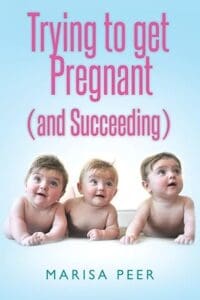
Book cover of 'Trying to Get Pregnant (and Succeeding)' by Marisa Peer, featuring three adorable babies sitting side by side on the journey of overcoming infertility.
  1. Tackling Emotional Blocks: RTT® helps you find and remove harmful, subconscious beliefs. They may be holding you back. Fears about parenthood, past traumas, and feeling unworthy can reduce your chances of conceiving. RTT® shifts these beliefs. It creates a mindset more supportive of conception. By shifting these beliefs, RTT® creates a mental space that’s more supportive of conception.
  2. Cutting Down on Stress and Anxiety: Chronic stress and anxiety can seriously mess with your fertility. RTT® addresses these feelings. It helps you relieve stress and relax. This state is better for conception.
  3. Boosting Confidence and Well-being: The infertility journey can feel overwhelming. RTT® can boost your self-esteem and confidence. It can help you face the process with a positive mindset. This may be the key to your success.
  4. Supporting Wellness: RTT® is about mental and emotional healing. Your mind-body connection means that better mental health can improve your physical health. This may make other infertility treatments more effective.

If you’re looking for more guidance, check out Marisa Peer’s book, Trying to get Pregnant (and Succeeding) . It’s a great resource for anyone on this journey.


Conceiving Against All Odds

It felt like everyone around us was getting pregnant with ease. They would think about it, and then they were expecting. Meanwhile, we were struggling, trying to understand why it wasn’t happening for us.

We explored every avenue, we visited OB-GYNs and fertility clinics, hoping to find answers and a solution. We even faced the chance of moving beyond IVF, with no guarantees it would work. The journey was emotionally draining, filled with tears and frustration. Intimacy started to feel like a chore, something we had to do rather than a way for us to connect as a couple. But through it all, our shared challenges, heartbreaks, and hopes deepened our bond.

Belief & Stress

Two things stood out to me during this journey—belief and stress. Our OB-GYN told us, “It only takes one.” Just one egg, just one sperm. That simple truth became a beacon of hope and one I didn’t realize would be so profound. Then, at the fertility clinic, we learned about the impact of stress on conception. They emphasized how high stress levels could hinder our chances of getting pregnant. Running a business in the Home Medical Equipment industry can be very stressful. We decided to take a step back and focus on reducing stress. Instead of diving into a fertility plan, we took a vacation—a chance to relax, reconnect, and just be together.

To our astonishment, that vacation resulted in a pregnancy. It was a bittersweet moment, as that pregnancy ended in a miscarriage. But from that loss, we gained something invaluable: the belief that we could conceive on our own. We decided to try for another year. If it didn’t work, we’d start hormone injections. Five months later, I was pregnant again.

This journey taught us so much about belief. The belief that we could do this, that we could get pregnant, was powerful. But it also taught us about the pain of loss and the strength it takes to keep going. My husband, who had been so supportive, admitted that he only wanted to go through this once. The pain of infertility, the fear of disappointment, was something he didn’t want to relive.

Shock & Awe

At eight weeks, I went in for an internal exam. My doctor noticed that I was larger than expected for my dates and recommended an ultrasound. On a fertility journey, you know all your dates, so I assumed I was just carrying a large baby. But at 11 weeks, during the ultrasound, we experienced a moment of sheer amazement. As the technician moved the wand over my belly, she showed us our baby’s heartbeat. After the heartbreak of a miscarriage, seeing that tiny heartbeat was an incredible relief. Then, she moved the wand again and revealed a second heartbeat. We were in shock—how was it possible that without any treatments, we were pregnant with twins?

The technician reassured us that it was an identical twin pregnancy, and everything looked amazing. But with twins, our pregnancy was now considered higher risk. We went back to the same OB-GYN who had told us, “It only takes one.” At each of our next three appointments, he asked me which fertility treatment I had undergone. He was surprised every time I told him there had been none. “It only takes one,” I reminded him. That belief had somehow led us to this incredible outcome.


The Journey Forward

Infertility is a complex challenge that affects your body, mind, and emotions all at once. To navigate this journey, we must take a well-rounded approach. It should cover all these areas. Medical treatments like IVF and hormonal therapies are often essential. But they work better with lifestyle changes—think balanced meals, exercise, and rest.

Just as important is taking care of your stress levels and emotional health. Mindfulness, meditation, and therapies like Rapid Transformational Therapy (RTT) can help. They can clear mental blockages and keep your mindset positive. To conceive, focus on your well-being. Nurture your relationships. Create a supportive environment. It can make all the difference.

If you’re struggling with infertility, you’re not alone. Many resources can help you. A holistic approach can boost your chances of conceiving. It can also improve your mental and emotional well-being. Keep hope alive. Reach out for support. Explore options for your journey to parenthood.

Book a 30-Minute Discovery Call


Disclaimer: The information provided here is for general guidance and informational purposes only. It is not intended to replace professional medical advice, diagnosis, or treatment. Always consult with a qualified healthcare provider regarding any medical concerns or conditions. The advice shared is based on general knowledge and should not be considered a substitute for personalized medical care.

As an Amazon Associate, I earn from qualifying purchases. This helps support the content and services provided here. Thank you for your support!