A Place to Practice
If you’ve ever left a session, workshop, or meaningful conversation feeling clear only to have life quickly pull you back into old patterns you’re not alone.
Insight alone doesn’t create change.
Practice does.
Most people don’t need more information. They need a way to integrate what they already know a place to slow down, regulate their nervous system, and reinforce new patterns in real time.
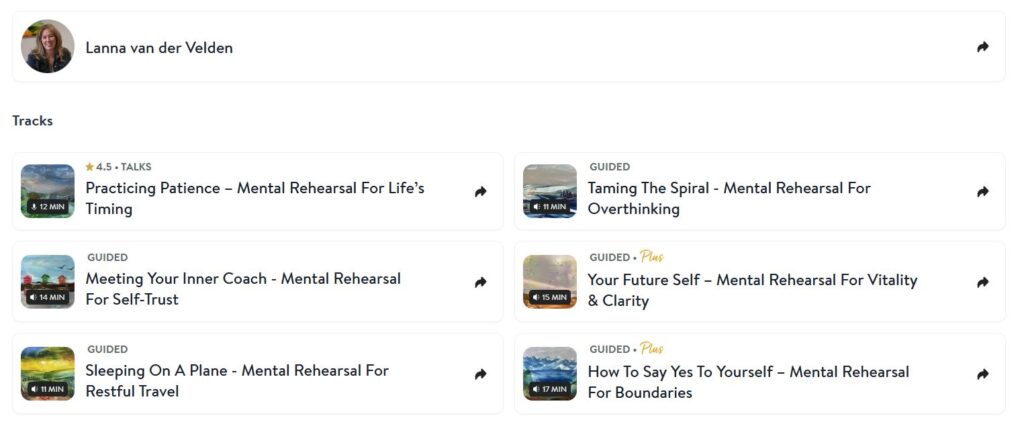
That’s where the Insight Timer app comes in.
It offers a simple, accessible way to practice mental fitness in everyday life. Whether you have five minutes or twenty, it gives you a place to pause, reconnect, and work with your mind intentionally without pressure or perfection.
This matters because meaningful change doesn’t happen only in big moments. It happens in small, repeated check-ins with yourself.
Why This Matters for Your Mental Fitness
If you’re doing inner work whether through therapy, coaching, self-reflection, or curiosity having a consistent practice space helps turn insight into embodiment.
Insight Timer supports this by offering:
- Short, repeatable practices you can return to
- Tools for emotional regulation and nervous system support
- Guided mental rehearsals to help you respond differently in real life
- A calm alternative to scrolling or numbing out
Because doing internal work is brave.

Looking at patterns, understanding triggers, and building emotional awareness takes heart. But having a practice space—somewhere where showing up transforms your relationship with your mind and body—makes that journey gentler.
You can show up to reconnect with yourself through meditation, breathwork, mental rehearsals, journaling prompts, and sleep tools.
Small windows of reflection create meaningful momentum.
Mental Rehearsals = New Pattern
One of the core tools I share on Insight Timer is mental rehearsal and if you’re new to the concept, it’s worth understanding why it’s such a powerful addition to your mental fitness toolkit.
Mental rehearsal is the practice of intentionally imagining yourself responding differently before or after real-life situations. Athletes have used this technique for decades to improve and embody their performance, but it’s just as effective for everyday life.
When you mentally rehearse, you’re not “thinking positive.”
You’re helping your brain and nervous system experience a new pattern one that feels safer, steadier, and more supportive than old automatic reactions.
Your brain doesn’t fully distinguish between what is vividly imagined and what is physically experienced. That means rehearsal becomes practice. And practice builds familiarity. And familiarity creates change.
What is Embodiment?

Insight lives in the mind.
Change lives in the body.
You can understand something deeply and still find yourself reacting the same way under stress. That is not failure. It is biology. When pressure shows up, your nervous system defaults to what feels familiar, not what you have logically decided.
Embodiment is what bridges that gap.
Embodiment means your body has experienced a new response, not just thought about it. It is the difference between knowing how to ride a bike and actually staying upright when you start pedaling.
When something is embodied:
• Your body recognizes it as familiar
• Your nervous system feels safer accessing it
• You are more likely to respond that way in real moments
This is why insight alone is often not enough.
What Happens Without Embodiment
Without embodiment, new insights stay intellectual. Old patterns keep running automatically. Stress overrides intention. Change feels fragile or inconsistent.
This can be frustrating, especially for thoughtful, self-aware people who know better but still feel stuck.
Nothing is wrong with you.
Your system just has not practiced the new pattern yet.
How Embodiment Is Built
Embodiment is built through repetition in a regulated state.
This is where tools like mental rehearsal, breathwork, and guided practices matter. They give your nervous system a chance to experience calm before a difficult moment, confidence in your body, and a pause instead of a reaction.
Over time, these repeated experiences become stored as available options.
When life gets messy, which it always does, you are more likely to access what you have embodied rather than what you have only understood.
Why This Matters in Everyday Life
Embodiment allows you to stay grounded during difficult conversations, respond instead of react, follow through on boundaries, and trust yourself under pressure.
It is how insight turns into lived change.
That is why practice matters. Not to force transformation, but to help your system learn what safety, steadiness, and choice actually feel like.
Insight Timer Is a Great Place to Practice
What makes Insight Timer so supportive is that it gives you accessible, repeatable practice. You don’t need an hour. You don’t need perfect conditions. You just need a few minutes and a willingness to show up.
Mental rehearsals on the app allow you to:
- Practice between sessions
- Reinforce new patterns gently
- Build consistency without pressure
- Return to yourself when life feels noisy
This is especially valuable if you want a way to support your learning, in real time, in real life.
Mental fitness isn’t built in big moments alone.
It’s built through small, intentional repetitions.
And mental rehearsal gives you a way to practice those repetitions—right where you are.
Access Free Mental Rehearsals
Mental rehearsals are especially helpful if you:
- Feel stuck in reactive patterns
- Want to respond instead of react
- Struggle with anxiety, overthinking, or emotional overwhelm
- Are working on new habits or boundaries
- Want to integrate insights from therapy or coaching into daily life
Through guided mental rehearsal, you can gently train your system to:
- Slow down stress responses
- Build emotional regulation
- Strengthen self-trust
- Rehearse new choices before real moments arise
It’s one thing to understand something intellectually.
It’s another thing to feel it in your body and nervous system.
That’s where mental rehearsal bridges the gap.