The World Feels Like it Runs on Fear
Fear gets our attention.
A warning makes us look, a threat makes us listen and uncertainty makes us want answers.
Attention is valuable.
News organizations, advertisers, social media platforms, political campaigns, and businesses are all competing for our attention, and sometimes even the people around us are doing the same.
Fear is a very effective way to capture it.
Think about some of the messages we’re surrounded by (including how this article started):
- You could be missing out.
- You’re falling behind.
- Something is wrong.
- They’re coming for what matters to you.
- You aren’t safe.
- You aren’t enough.
- You need this before it’s too late.
Our Protector hears those messages and asks:
“Am I safe?”
Once the Protector is activated, our Thinker can quickly join the conversation.
Before we know it, we’re searching for more information, reading another article, watching another video, or scrolling through the comments. We start looking for evidence to support what we’ve heard, replaying the details in our minds and trying to predict what might happen next.
Our Survival Team is doing exactly what it was designed to do.
The question is whether there is actually something we need to respond to.
Throughout this series, we’ve explored fear from several different perspectives. We began with What Fear Really Looks Like, recognizing the many masks fear can wear. Next, in Fear Is a Gift, we discovered why fear exists and met our Survival Team and Growth Team. Then, in From Fear to Self-Trust, we explored how to pause, access our inner resources, and consciously choose how we respond.
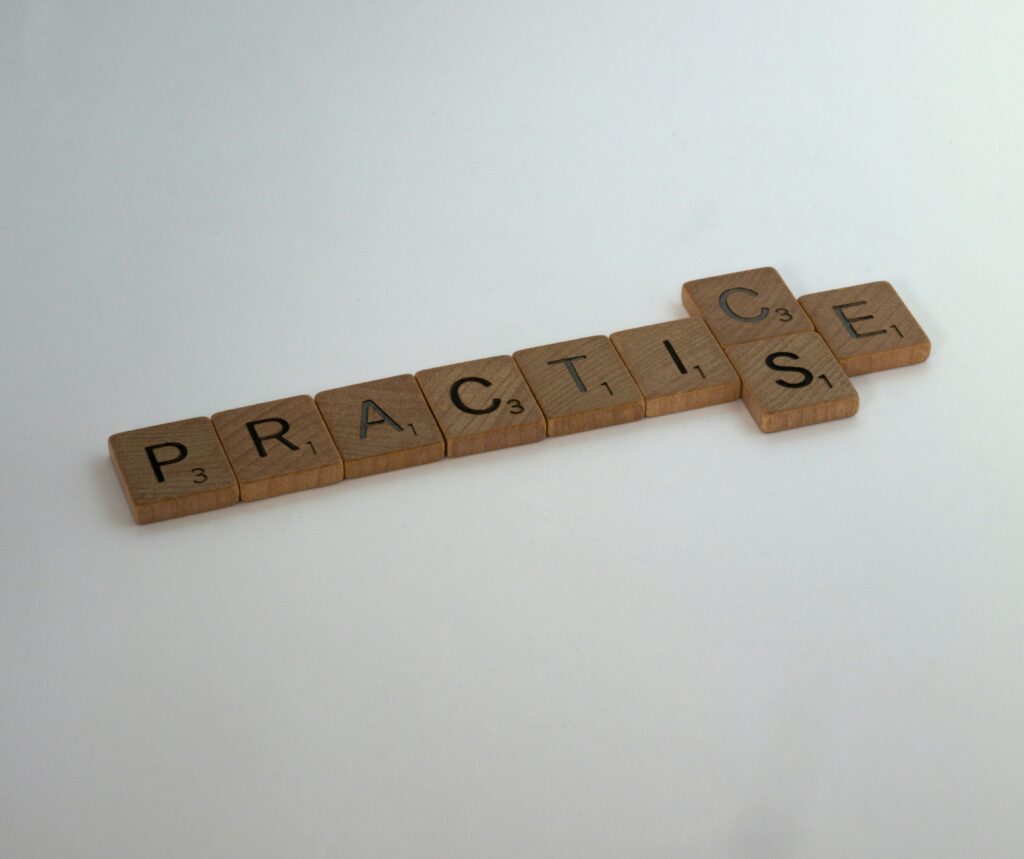
Now comes the ongoing practice.
We live in a world filled with information, opinions, uncertainty, advertising, headlines, notifications, algorithms, other people’s emotions, and very real challenges.
Our Protector has plenty to pay attention to.
The goal isn’t to retreat from the world.
It’s to learn how to live fully in it without allowing fear to decide how we experience it.
Be Curious About What You Feed Your Mind
We often hear about the importance of what we put into our bodies, but how often do we stop to consider what we’re feeding our minds?
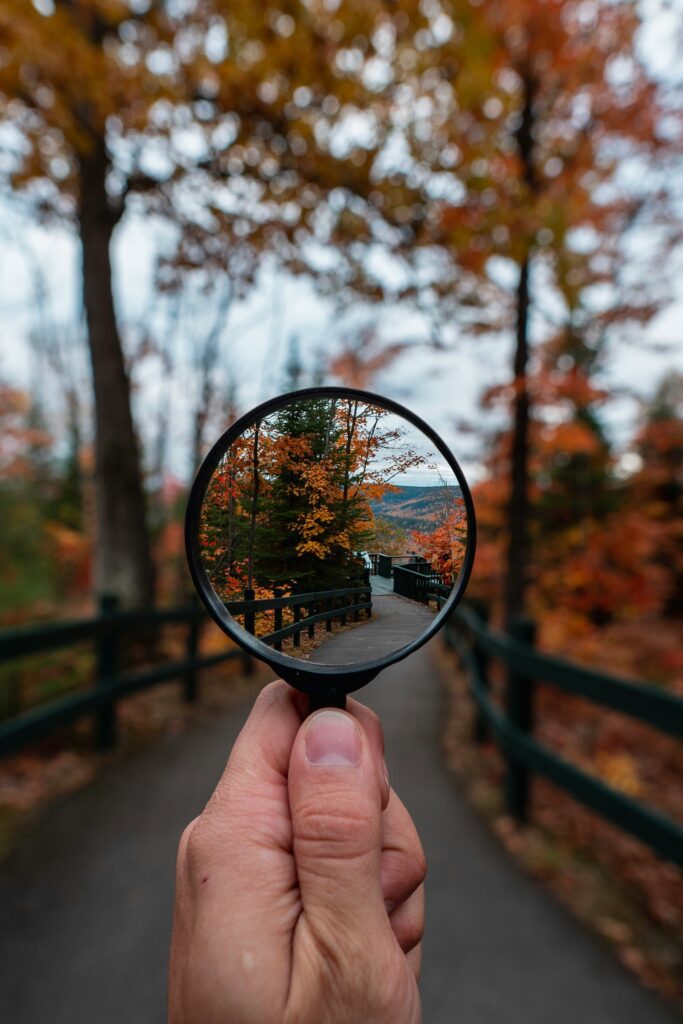
I started asking myself that question when I became curious about the difference between the world I was seeing through the screen and the world I was actually experiencing. What I discovered changed the way I pay attention to both.
- What am I watching?
- What am I reading?
- Who am I listening to?
- How do I feel after twenty minutes of scrolling?
- Am I becoming informed—or activated?
- Am I learning something useful—or feeding a story?
- Is this helping me take meaningful action—or simply keeping my Protector on alert?
This isn’t about avoiding difficult information or surrounding ourselves only with things we agree with.
It’s about conscious consumption.
We get to decide what deserves our attention.
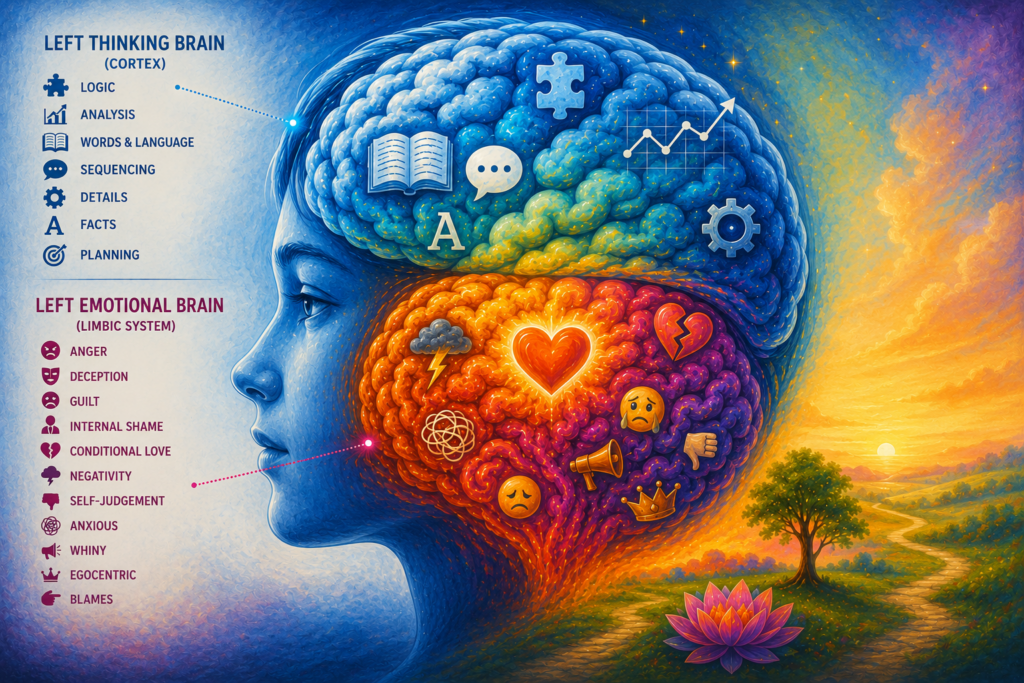
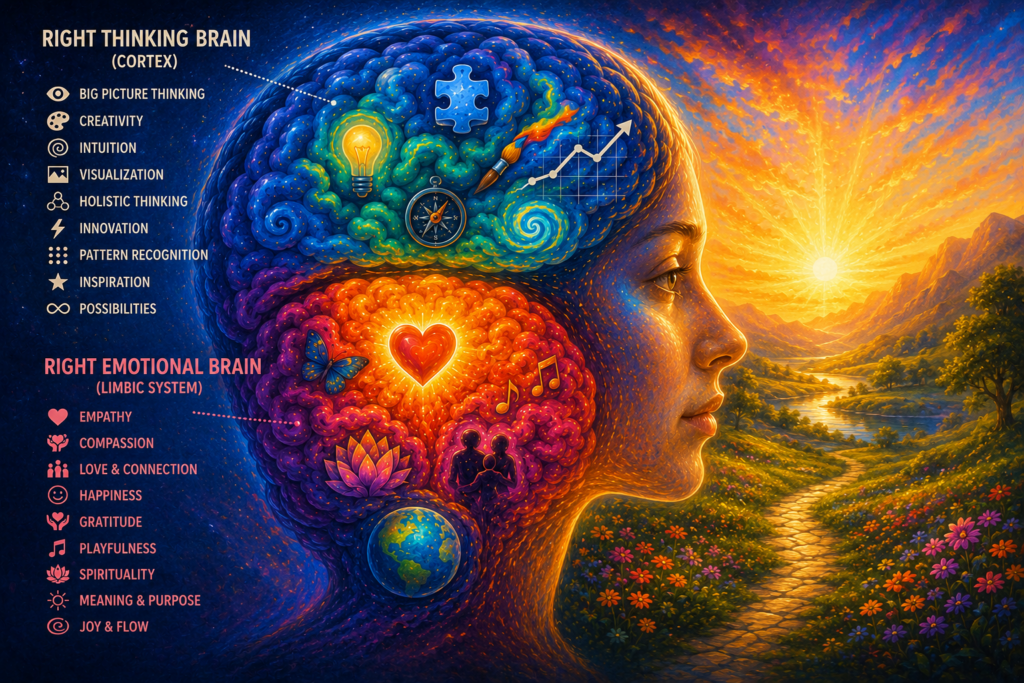
This is where everything we’ve practiced throughout this series comes together.
When something activates your Protector:
Notice. Pause. Listen. Invite. Choose.
🛡️ Protector: What are you trying to tell me? Is there something here that genuinely needs my attention?
🧠 Thinker: What do I actually know? What information do I need? What action, if any, needs to be taken?
❤️ Heart: Can I meet this with compassion? Can I remain connected to myself and to the humanity of the people involved?
✨ Visionary: What else could be true? What am I not seeing? What possibilities exist beyond the story fear is telling me?
This is what it means to have access to the whole team.
We need fear for survival, but in today’s world, we also need to practice bringing our whole team into the conversation.
We haven’t eliminated fear. We’ve expanded the conversation.
For years, I enjoyed watching true crime. Alongside those stories, I would hear about accidents, violence, natural disasters, and other frightening events happening around the world.
Eventually, I became curious. If all these terrible things were happening so frequently, why wasn’t I seeing them everywhere in my everyday life?
I decided to put on my investigator’s hat and start asking questions. Was the world really as dangerous as it appeared, or was I being exposed to a very particular selection of what was happening? How often did these events actually occur? What did the evidence tell me beyond the stories?
I wasn’t trying to convince myself that bad things don’t happen. Of course they do. I simply wanted a fuller picture.
I still notice this today when I browse suggested shows and movies. So much of what’s offered as entertainment revolves around murder, violence, disaster, conflict, hate or some type of fear that I could get caught up in.
And that got me thinking about something bigger than what we watch.
How much of our attention is spent consuming what others put in front of us, rather than considering what we actually want?
When we’re constantly taking in information, opinions, entertainment, and other people’s ideas about what’s important, it’s easy to lose sight of our own interests, desires, and possibilities. We may not even be asking ourselves a very important question:
What do I really want?
For me, this is where the idea of moving from consumer to creator becomes exciting.
Being a creator doesn’t necessarily mean making art, writing a book, or starting a business. It could mean creating more meaningful conversations, a calmer home, stronger relationships, opportunities to learn, or simply more moments of joy and connection.
It’s about becoming an active participant in how we experience our lives, rather than allowing everything around us to determine where our attention goes.
We don’t have to stop consuming information or entertainment. We can simply become more curious about what we’re taking in, how it’s affecting us, and whether it’s helping us create the life we want.
Am I making room to create what I want?
Practice the States You Want Available
Our brains become more familiar with what we repeatedly practice.
So if we want curiosity, compassion, awe, wonder, creativity, play, and calm to be available when life gets difficult, we need to spend time experiencing them when life isn’t difficult.
- This is training.
- Notice a sunset.
- Play without needing to accomplish anything.
- Get curious about something simply because it interests you.
- Look for moments that create awe or wonder.
- Practice compassion when the stakes are low.
Each time we intentionally access these states, we become more familiar with the resources of our Growth Team, making it easier to find our way back to them when our Protector gets loud.
I’d love to tell you there’s a magic pill for creating the life we want. I’ve looked for it, because practice can be hard! But this is where the real work happens, and practice takes action.
For example, the next time you find yourself scrolling through frightening headlines or suggested videos, pause and ask, “Is this how I want to spend my attention right now?” You might decide to keep watching, and that’s perfectly okay. The important part is that you’re making a conscious choice.
It’s about making small, conscious choices every day, noticing what works, learning from what doesn’t, and continuing to show up for ourselves. Progress doesn’t require perfection, but it does require participation.
We create the life we want through the choices we make and the actions we practice every day.
Explore the Fear Series:
- Part 1: What Fear Really Looks Like
- Part 2: Fear As A Gift
- Part 3: From Fear to Self-Trust
- Part 4: Living Beyond Fear